Canis lupus familiaris
Pomeranian
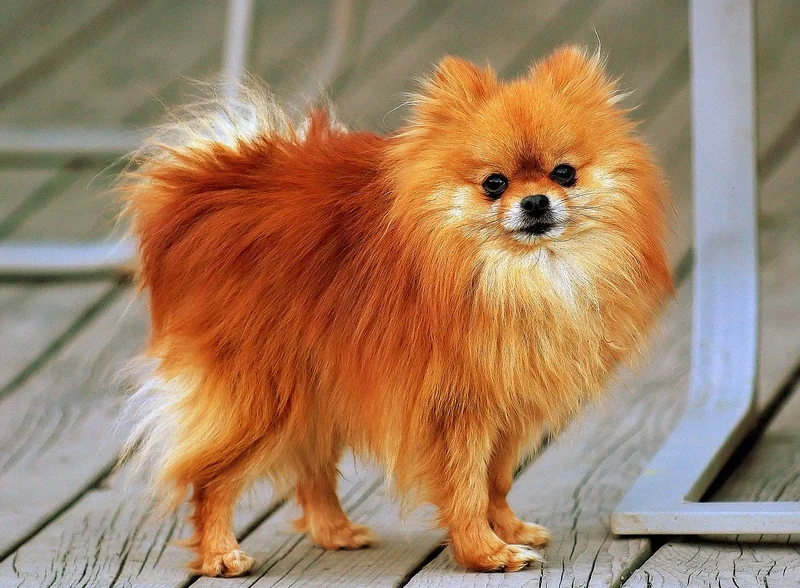 Featured photopomeranian.jpg
The Pomeranian is a downsized German/Polish Pomeranian Spitz toy popularized below 4 kg by Queen Victoria. The Pomeranian is the smallest of the German/Polish Spitz breeds, downsized from larger sled-dog ancestors that lived in the historic region of Pomerania on the southern Baltic coast.
Quick facts
- AKC group
- Toy
- Origin country
- Pomerania (modern Germany / Poland)
- Origin period
- 18th century (downsized 19th century)
- Coat type
- Double
- Coat colors
- Orange, Cream, Black, Brown, Sable, Wolf Sable, Parti-color
- Average lifespan
- 12-16 years
- Recognition
- AKC 1900 · FCI 1957 · UKC 1913 · Group 5 — Spitz and Primitive Types (Section 4: European Spitz)
Origin
The Pomeranian is the smallest of the German/Polish Spitz family — alongside the Wolfspitz (Keeshond), Großspitz, Mittelspitz, Kleinspitz, and Zwergspitz (Pomeranian) — descended from larger Nordic sled-dog ancestors that had reached the southern Baltic coast (the historic region of Pomerania, now divided between northern Germany and northwestern Poland) by the 18th century. Original Pomeranians weighed 13-14 kg. Queen Victoria, who acquired her first Pomeranian Marco in Florence in 1888, drove the breed below 4 kg through her preference for ever-smaller specimens; the breed was bred down to its modern toy size by the 1900s. The AKC registered the first Pomeranian in 1900.
Recognition
The American Kennel Club admitted the breed in 1900, the United Kennel Club followed in 1913, and the Federation Cynologique Internationale published the international standard (FCI No. 97) in 1957. The FCI assigns the breed to Group 5 — Spitz and Primitive Types (Section 4: European Spitz).
Standard
The AKC and FCI standards describe a compact, short-coupled toy spitz of the Nordic type, well-knit in frame, with a foxy expression. The defining feature is the abundant double coat: a soft, fluffy undercoat and a long, harsh, straight outer coat that stands off from the body, especially heavy around the neck (the 'frill') and on the rear of the legs. Recognized colours include the full spectrum from black through every shade of orange, red, brown, cream, and sable. The breed stands 18-30 cm at the withers (FCI Zwergspitz: 18-22 cm) and weighs 1.5-3.5 kg.
Sources & further reading (3)
- kennel-club-registry — accessed 2026-05-04
- encyclopedia — accessed 2026-05-04
- fci-standard — accessed 2026-05-04
Frequently asked questions
What is the Pomeranian's AKC group?
The American Kennel Club places the Pomeranian in the Toy Group. The Toy Group gathers small companion breeds historically kept as lap dogs and household companions, including the Pug, Pomeranian, Maltese, and Cavalier King Charles Spaniel. The breed's foundation working role was as a downsized German/Polish Pomeranian Spitz toy popularized below 4 kg by Queen Victoria.
When was the Pomeranian officially recognized?
The American Kennel Club admitted the breed in 1900; the United Kennel Club followed in 1913; the Federation Cynologique Internationale published the international standard (FCI No. 97) in 1957.
What is the average lifespan of a Pomeranian?
Kennel-club longevity surveys place the Pomeranian's average lifespan in the 12-16 years range. The figure here represents the spread reported by the major parent-club studies and the Kennel Club (UK) purebred-dog health surveys.