Canis lupus familiaris
Borzoi
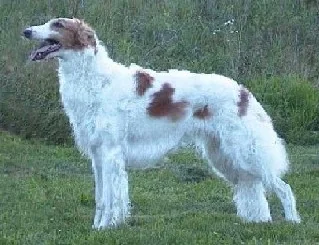 Featured photoborzoi.jpg
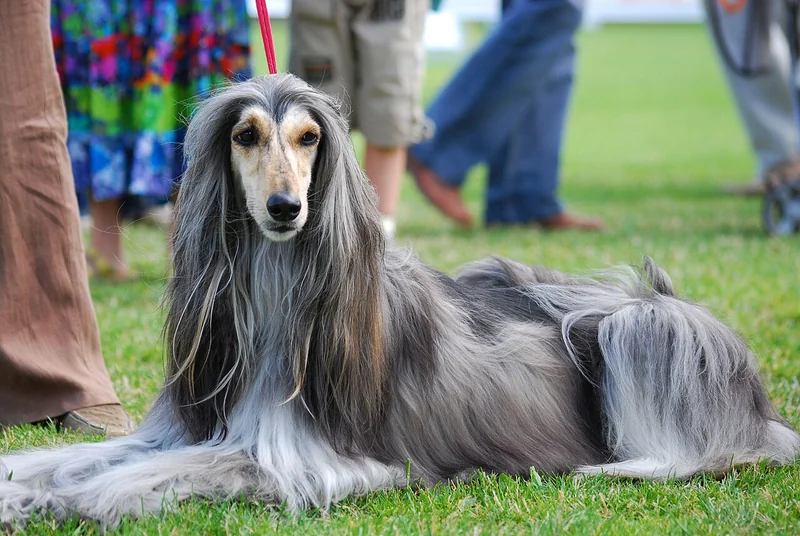
The Borzoi is a Russian aristocratic wolf-coursing sighthound of the formal psovaya okhota. The Borzoi (Russian борзая, 'swift') was developed in 17th-century Russia by the aristocracy as a coursing sighthound for the formal Russian wolf hunt, in which packs of Borzois were unleashed in pairs to seize the wolf.
Quick facts
- AKC group
- Hound
- Origin country
- Russia
- Origin period
- 17th century (formalized 1888)
- Coat type
- Long
- Coat colors
- Any color or combination — white, gold, sable, brindle, red, agouti, with pattern variations
- Average lifespan
- 9-14 years
- Recognition
- AKC 1891 · FCI 1956 · UKC 1948 · Group 10 — Sighthounds (Section 1: Long-haired or fringed Sighthounds)
Origin
The Borzoi was developed in 17th-century Russia by the aristocracy from imported Saluki, Greyhound, and Russian working sighthound stock as the courser of the formal Russian wolf hunt (psovaya okhota). The hunt — practised on grand estates such as that of Grand Duke Nikolai Nikolaevich at Pershino — released packs of dozens of Borzois in pairs to seize a wolf already located by horsemen; the dogs would seize the wolf by the neck and hold it until the master arrived. The first formal breed standard was published in 1888 and the breed reached the United States in the 1890s. The 1917 Bolshevik Revolution and the abolition of the aristocracy nearly extinguished the breed in Russia; the Western line was rebuilt from imports made before the revolution.
Recognition
The American Kennel Club admitted the breed in 1891, the United Kennel Club followed in 1948, and the Federation Cynologique Internationale published the international standard (FCI No. 193) in 1956. The FCI assigns the breed to Group 10 — Sighthounds (Section 1: Long-haired or fringed Sighthounds).
Standard
The AKC and FCI standards describe a Russian sighthound of elegant, hare-shaped outline, with a long, narrow, slightly arched head, a deep narrow chest, an exceptionally narrow, tucked-up loin, and long well-muscled hindquarters. The defining feature is the long, silky, flat or slightly wavy coat with profuse feathering on the chest, legs, and tail; any colour is acceptable. Males stand 75-85 cm at the withers, females 68-78 cm.
Sources & further reading (3)
- kennel-club-registry — accessed 2026-04-30
- encyclopedia — accessed 2026-04-30
- fci-standard — accessed 2026-04-30
Frequently asked questions
What is the Borzoi's AKC group?
The American Kennel Club places the Borzoi in the Hound Group. The Hound Group gathers breeds developed for the hunt, broadly split into scent hounds (Bloodhound, Beagle, Coonhounds) and sight hounds (Greyhound, Whippet, Borzoi). The breed's foundation working role was as a Russian aristocratic wolf-coursing sighthound of the formal psovaya okhota.
When was the Borzoi officially recognized?
The American Kennel Club admitted the breed in 1891; the United Kennel Club followed in 1948; the Federation Cynologique Internationale published the international standard (FCI No. 193) in 1956.
What is the average lifespan of a Borzoi?
Kennel-club longevity surveys place the Borzoi's average lifespan in the 9-14 years range. The figure here represents the spread reported by the major parent-club studies and the Kennel Club (UK) purebred-dog health surveys.